
Innovations That Could Shape the World of Tomorrow
The future rarely arrives exactly the way people expect it to. A few decades ago, smartphones, self-driving systems, artificial intelligence, and instant access to information sounded like ideas from science fiction. Today, many of them are already part of everyday life.
Technology continues to move quickly, and some of the innovations being developed today could have an even bigger impact on the world tomorrow. From artificial intelligence and clean energy to advanced robotics and biotechnology, these technologies could change how we live, work, travel, and communicate.
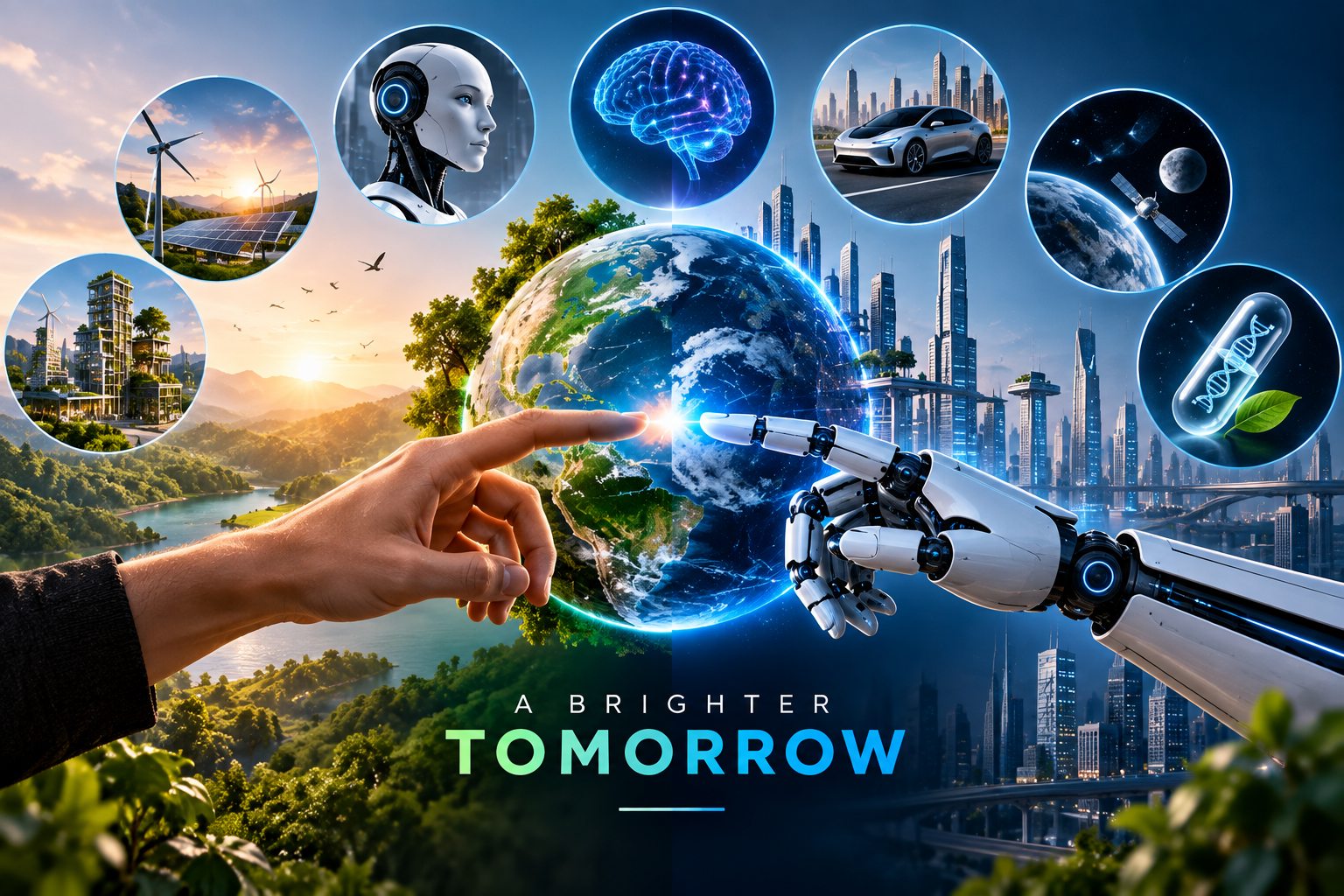
Some ideas may become mainstream within a few years, while others could take decades to mature. What they have in common is the potential to solve difficult problems and create new possibilities. Here are some of the innovations that could shape the world of tomorrow.
Artificial Intelligence That Can Work Alongside People
Artificial intelligence is already changing how people interact with technology, but today’s AI may only be an early stage of what is possible.
Future AI systems could become much better at understanding complex instructions, reasoning through problems, and working with different types of information. Instead of simply answering questions, AI could help people complete entire projects.
For example, a business owner might use an AI system to analyze sales information, identify opportunities, prepare a marketing plan, and organize tasks for the team. A student could use AI as a personalized learning assistant that adapts explanations according to their strengths and weaknesses.
The biggest impact may come from AI working alongside humans rather than simply replacing them. People can provide creativity, judgment, and real-world experience, while AI handles large amounts of information and repetitive work.
Robots Becoming Part of Everyday Life
Robots have traditionally been associated with factories and highly controlled environments. That could change significantly in the coming years.
Advances in AI, sensors, computer vision, and robotics are making machines more capable of navigating environments and performing increasingly complicated tasks.
Future robots could assist with warehouse operations, construction, agriculture, healthcare, cleaning, and home services. In industries where work is dangerous or physically demanding, robots could take on tasks that put people at risk.
Home robots are another possibility. Rather than being limited to simple automated functions, future machines could potentially understand their surroundings and perform several household tasks. The challenge will be making these robots affordable, safe, reliable, and genuinely useful in real-world environments.
Cleaner and Smarter Energy
Energy will be one of the biggest challenges of the future. As populations grow and technology becomes more dependent on electricity, the world will need reliable energy sources with lower environmental impact. Renewable energy, better batteries, smarter power grids, and new energy technologies could all play a role.
Solar and wind power are already expanding, but the future may bring more efficient ways to generate and store renewable electricity.
Better energy storage could be particularly important. Renewable sources do not always produce electricity when demand is highest, so improved batteries and other storage technologies could help balance supply and demand.
Smart energy systems could also allow homes, vehicles, businesses, and power networks to communicate with one another, making electricity use more efficient.
Electric and Autonomous Transportation
Transportation is another area where technology could dramatically change everyday life. Electric vehicles are becoming increasingly common, but future transportation may go beyond simply replacing petrol engines with electric motors.
Autonomous driving technology could eventually allow vehicles to handle more of the driving process themselves. If the technology becomes reliable enough, it could make transportation more accessible and potentially reduce some types of accidents caused by human error.
Electric buses, delivery vehicles, aircraft technologies, and other forms of transportation could also become more advanced.
Urban transportation may change as well. Smart traffic systems could communicate with vehicles and infrastructure to improve traffic flow and reduce unnecessary delays. The future of transportation could therefore be cleaner, smarter, and more connected.
Biotechnology and Personalized Medicine
Some of the most important future innovations may happen inside laboratories rather than on our screens. Biotechnology is advancing our understanding of cells, genes, diseases, and the human body. These developments could lead to more personalized approaches to healthcare.
Instead of treating every patient in exactly the same way, future medical systems could increasingly consider an individual’s genetic information, lifestyle, medical history, and other characteristics when selecting treatments.
Researchers are also exploring technologies that could help repair damaged tissues, develop new treatments, and detect certain diseases earlier.
The potential is enormous, although medical innovation must be carefully tested before becoming widely available. Safety, ethics, cost, and accessibility will all be important considerations.
Quantum Computing
Traditional computers have become incredibly powerful, but some problems remain extremely difficult to solve.
Quantum computing takes a fundamentally different approach to computation and could eventually help researchers tackle certain problems that are difficult for conventional computers. Potential applications include advanced scientific research, materials discovery, optimization, and complex simulations.
Quantum computers are still an emerging technology, and practical large-scale applications remain challenging. But if researchers overcome the major technical barriers, quantum computing could influence fields ranging from medicine to cybersecurity. It is one of those technologies that may seem distant today but could become extremely important tomorrow.
Smarter Cities
As more people move into urban areas, cities will need better ways to manage transportation, energy, water, waste, and public services. Smart city technology could help.
Connected sensors and AI systems can potentially monitor traffic, energy consumption, air quality, infrastructure, and other aspects of urban life.
Imagine streetlights that automatically adjust according to conditions, transportation systems that respond to traffic in real time, or water networks that identify leaks before they become major problems.
The goal is not simply to fill cities with technology. The real objective is to make urban environments more efficient, sustainable, and comfortable for the people living in them.
New Ways to Experience the Digital World
The internet may also become more immersive. Virtual reality and augmented reality technologies could change how people learn, communicate, work, and entertain themselves.
Instead of watching a demonstration on a flat screen, students could explore a virtual environment. Employees could meet inside shared digital spaces. Customers could visualize furniture inside their homes before purchasing it.
As hardware becomes lighter and software becomes more capable, digital experiences could become increasingly connected to the physical world.
This does not necessarily mean everyone will spend their entire day wearing a headset. More likely, immersive technology will become another tool people use when it provides a clear advantage.
Advanced Materials Could Change Everyday Products
Materials science is another area that often receives less attention than AI or robotics but could have a huge impact.
Researchers are developing materials that can be lighter, stronger, more flexible, more conductive, or more resistant to extreme conditions.
New materials could improve everything from batteries and buildings to electronics and transportation. A lighter and stronger material could make vehicles more efficient. Better materials for batteries could improve energy storage. More efficient electronic materials could help create smaller and more powerful devices. These improvements may not always be visible to consumers, but they can quietly transform entire industries.
The Future Will Depend on More Than Technology
Innovation alone does not guarantee a better future. A new technology can create enormous benefits, but it can also introduce new risks. Artificial intelligence raises questions about privacy and employment. Biotechnology involves ethical considerations. Autonomous systems require strong safety standards. New digital technologies can create security challenges.
That means the future will depend not only on inventing new technologies but also on deciding how responsibly they should be used. Governments, businesses, researchers, and ordinary people will all have a role to play. The most successful innovations will likely be those that solve real problems while earning people’s trust.
