
What’s Next for the Future of the Internet?
The internet has changed dramatically over the past few decades. What started as a simple way to share information has become a huge part of everyday life. We use it to work, shop, study, communicate, watch entertainment, manage businesses, and even control devices in our homes.
But the internet we use today may look very different in the years ahead. Faster connections, artificial intelligence, virtual worlds, smarter devices, and new approaches to online privacy are already changing the digital landscape. So, what’s next for the future of the internet?
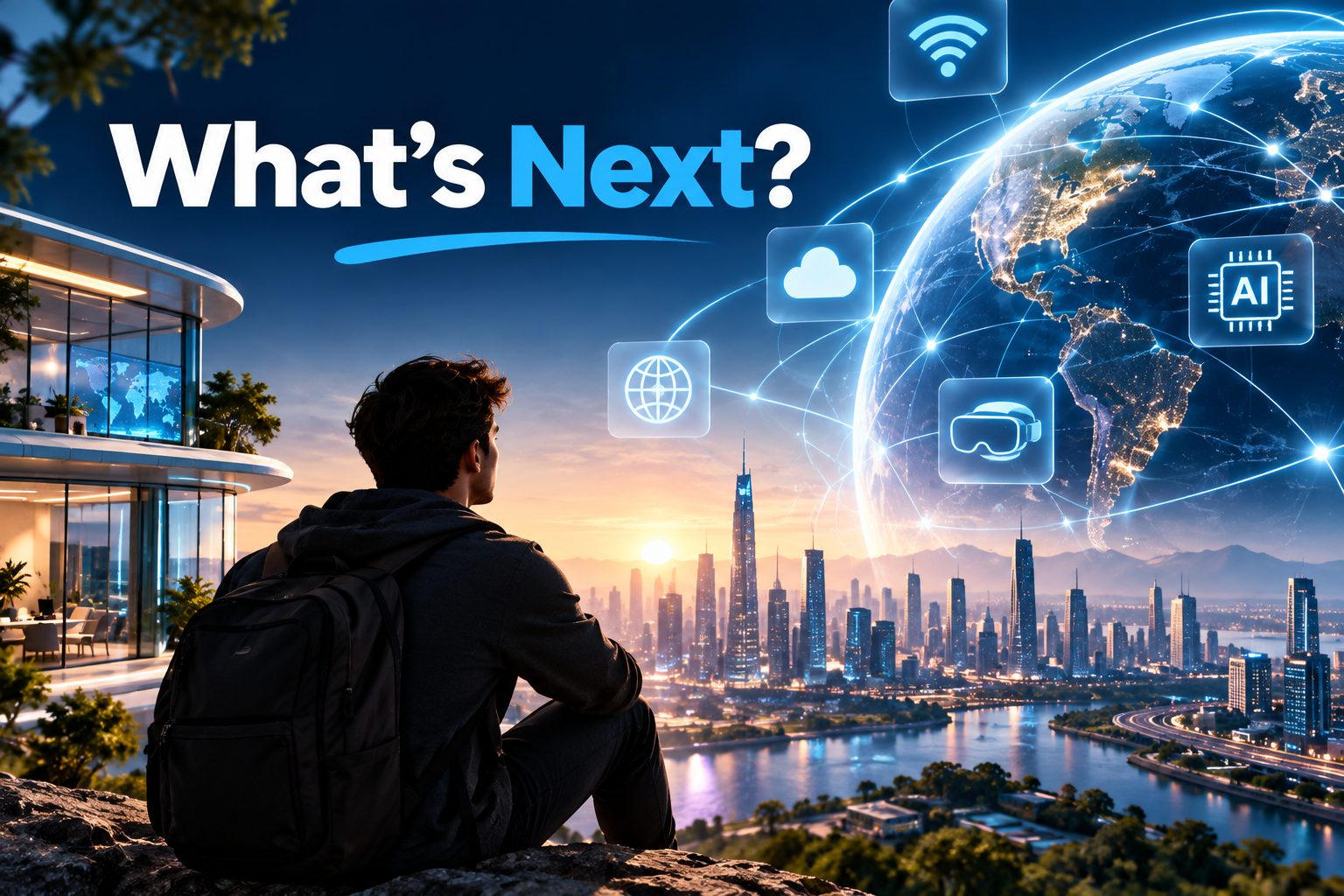
The answer is not just faster websites or better Wi-Fi. The next generation of the internet could be more intelligent, more personalized, and much more connected to the physical world.
The Internet Is Becoming More Intelligent
One of the biggest changes coming to the internet is the growing role of artificial intelligence.
For years, the internet mainly helped people find information. Search engines gave us pages of websites, and users had to read through those pages to find what they needed.
AI is changing that experience. Instead of searching through dozens of links, people can increasingly ask questions in natural language and receive direct answers. AI can summarize information, compare options, analyze documents, and help users complete tasks.
In the future, the internet may become less about finding information and more about getting things done. Imagine telling your digital assistant that you need to plan a weekend trip. Instead of simply showing you travel websites, it could help compare destinations, check schedules, organize an itinerary, and keep everything in one place. That is a major shift in how people interact with the web.
AI Agents Could Become Our Digital Helpers
The rise of AI agents could take this even further. Traditional websites require users to perform actions themselves. You visit a website, search for something, fill out a form, click through different pages, and complete the process.
AI agents could handle some of these steps on your behalf. For example, an AI agent might help manage appointments, organize emails, compare products, research information, or handle routine online tasks.
This could make the internet feel much more like a personal assistant than a collection of websites. However, this also creates new questions about trust and control. If an AI agent can make purchases, access accounts, or communicate with other services, users will need strong security and clear permission controls.
The Internet Will Become More Connected
The internet is no longer limited to computers and smartphones. Today, smart TVs, watches, cars, security cameras, appliances, fitness devices, and industrial machines can all connect to the internet. This trend is expected to continue.
As more everyday objects become connected, the boundary between the physical and digital worlds will become increasingly difficult to notice.
Your home could automatically adjust its temperature based on your routine. A car could communicate with other systems to improve navigation. Businesses could monitor equipment in real time and identify potential problems before something breaks.
This connected environment is often described as the Internet of Things, or IoT. The goal is simple: make devices more useful by allowing them to communicate with each other.
Faster Internet Will Change What Is Possible
Internet speed may sound like an obvious area of development, but faster and more reliable connections can unlock entirely new experiences.
As networks improve, activities that currently require powerful local hardware or complicated setups may become easier to access through the internet.
Cloud gaming is one example. Instead of needing an expensive computer or console, users can potentially stream demanding games through online services.
The same idea can apply to professional software, artificial intelligence, video editing, education, and other demanding applications.
As connectivity improves, more computing power can happen in the cloud while users access the results through relatively lightweight devices.
Virtual and Augmented Reality Could Become More Normal
Another possible direction for the internet is a more immersive online experience.
Most of today’s internet is viewed through screens. You open a browser, scroll through pages, watch videos, and interact with apps. Virtual reality and augmented reality could change that.
Instead of simply looking at a website, users could eventually enter digital environments where they interact with information in a more physical way.
Imagine attending a virtual meeting where participants appear around the same digital table, exploring a virtual museum from home, or viewing a 3D model of a product before buying it. These experiences are still developing, but they show how the future internet could become more immersive.
Privacy Will Become Even More Important
As the internet becomes more personalized and connected, privacy will become a bigger concern.
Websites and apps already collect large amounts of information about users. Future technologies could potentially collect even more data through connected devices, AI systems, location services, and wearable technology.
That creates an important challenge. People want convenient digital experiences, but they also want control over their personal information.
The future internet will need stronger approaches to data protection, transparency, and user consent. People should know what information is being collected, why it is being collected, and how it is being used. Convenience should not automatically mean giving up privacy.
A More Personalized Internet
The internet has traditionally shown the same basic services to millions of people. That is changing. AI can understand individual preferences and provide increasingly personalized experiences. News feeds, shopping recommendations, entertainment suggestions, search results, and digital assistants can all adapt to individual users.
In the future, websites and online services may become much more dynamic. Two people visiting the same digital platform could have completely different experiences based on their needs and preferences.
This can be helpful, but there is a downside. Too much personalization could create digital “bubbles” where people mostly see information that matches what they already believe. Finding the right balance between personalization and exposure to different perspectives will be important.
The Internet Could Become More Decentralized
Another important discussion around the future of the internet involves decentralization.
Traditional online services often depend heavily on large companies and centralized platforms. These companies manage huge amounts of data and control important parts of the digital experience.
Decentralized technologies aim to distribute control across networks rather than placing everything in the hands of a single organization.
Blockchain is one technology associated with this idea, although its practical applications extend far beyond the original hype surrounding cryptocurrencies.
The broader goal is to explore whether users can have more ownership and control over digital identities, assets, and information.
Whether decentralization becomes a major part of everyday internet use remains uncertain, but the idea continues to influence how people think about the future web.
What Will Happen to Social Media?
Social media will likely change as well. People are already moving beyond simple text-based posts toward short videos, live content, private communities, immersive experiences, and AI-generated media.
AI could also make it easier for individuals and businesses to create high-quality content without large production teams. At the same time, misinformation and fake content could become harder to identify.
The future of social media will therefore depend not only on new features but also on how platforms handle trust, authenticity, privacy, and online safety.
The Biggest Change May Be How We Use the Internet
Perhaps the most interesting part of the future internet is that we may not “use the internet” in the same obvious way we do today.
Instead of sitting down and opening a browser every time we need something, online services could become integrated into everyday activities. Your car, home, phone, glasses, workplace, and other devices may quietly communicate with online systems in the background.
The internet could become less visible while becoming more important. In other words, the future may not feel like we’re spending more time online. It may feel like the digital world has simply become part of the physical world around us.
